Problems In Helmand

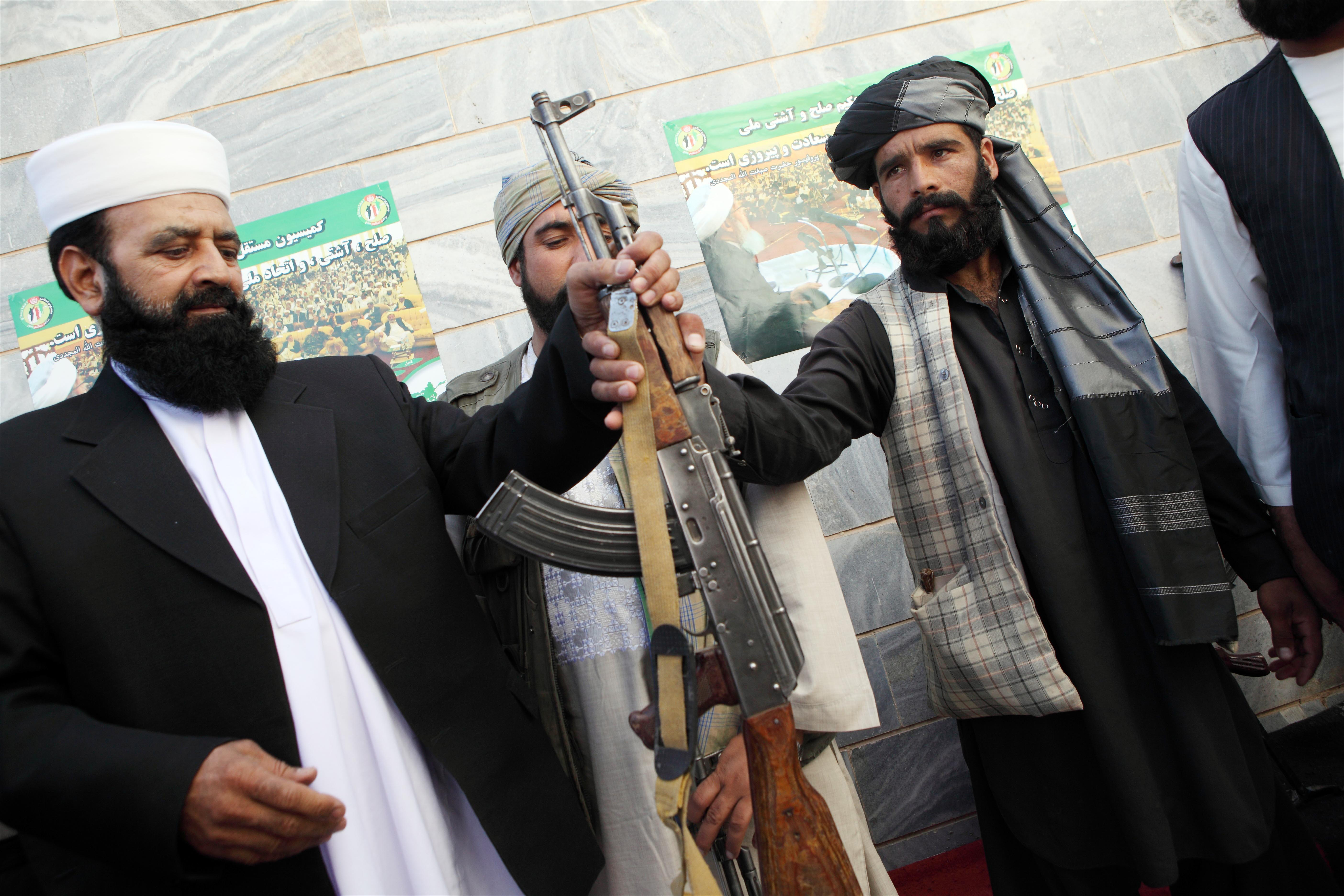
Taliban Fighters Surrender In HeratBLUF: In modern conflict one only wins if they are able to achieve affects militarily, socially, culturally and politically.

The later three are mostly ignored in most modern conflict endeavors. Our training, both military and Department of State, has no capacity to teach/train our people how to win this fight.

As I write these blogs, I’m often asked to comment on stories that are published. I understand why, much of what you hear isn’t clear or told in a manner that truly conveys the whole story. This is normal…and to be expected. In this week’s blog I’ve been ask to comment on https://soundcloud.com/bbc-world-service/afghan-taliban-not-as-big-a

First, the Taliban is likely losing battles. However, the interviewer is correct in doubting the long-term success. The enduring capability of the Afghan police and military are yet to be determined.

My experience tells me that long term growth for the military is possible; however, progress thus far is rather difficult to measure. Keep in mind we are well past 10 years into this endeavor. Ten years of teaching and training should net a pretty significant level of competence…should. However, this doesn’t seem to be the case in most of Afghanistan. Why? That is another blog post…

Second, a critical point is raised in the interview. The local Taliban leaders are from the region. This leaves an indelible mark on the perception of the populace. We have to also realize that this makes the Taliban leaders local or family. Family means survival.

Also, the Taliban were the government before our arrival. If they are still there and exerting power, what has changed for the populace? In Helmand after 10 plus years of fighting, if the Taliban leaders are still there, still wielding power, are they not the local government? Haven’t they proven, to the locals that they will always remain in power?

Even if the Taliban have fled certain areas, the long term security is doubted by locals. Why? We have to go back to capacity. The ability of the police to arrest, try and convict is not sufficient to warrant any confidence from Afghans. When we get to the “ground truth” we see a police force that doesn’t itself believe it can put people in jail. One of things I hope we’ve learned in both Iraq and Afghanistan is that simply arresting people in hopes of gaining some sort of stability is folly.

Actually this practice of knocking in doors and arresting “criminals” only to release them creates anger with the populace. This anger begets more bombs. We’ll cover more on this topic in another blog.

Forget the capacity of the police and Afghan army. The Taliban, while not desirable, is the leading force in the region and in many others of Afghanistan. Now what do we do to change that?

Let’s look at this from another angle. What does the government effectively do for the population? If the governor is able to provide services, it’s possible they will eventually accept Afghan governmental (known as GIRoA) rule as dominant. If the local government is failing, then it’s highly unlikely that they are seen as anything more than puppets.

In most cases, the government does little if anything at all for the people. I’ve talked to farmers and villagers; they do not see GIRoA as an effective government. Also, many families (again Family = survival) are self governing. They ensure they have water, food and work. There isn’t a rural family in Afghanistan that has survived without family/tribal support. Now…go find me a rural family that survives because of GIRoA support.

Waiting….

It takes years to eventually make a government “legitimate” with its people. Our training does little (and that’s kind) to promote the social movement of the population towards the government. By not focusing early on this factor, we’ve done little to help our partners establish a government of, for and by the people. We are great at putting the pieces together, building a fledgling government. Our ability to see this strategic vision is tremendous. However, it’s a government with no foundation.

Finally, if the government is in active talks with the Taliban, isn’t it safe for locals to assume that Taliban influence is going to remain in their region? If family = survival. If family = Taliban. If the government is fighting the Taliban…what is our expected outcome?

Still waiting…

Get Ready Hawai’i

Get ReadyI write often about my time in conflict zones and comment on some of the lessons I’ve learned from those experiences. I don’t want to give the impression that my experiences only relate to combat situations. Actually, most of what I’ve learned has direct application to outside of the military and military operations. In this blog I thought I would illustrate that point with an example of a problem from the Emergency Management community that I recently encountered.
In the Emergency Management industry, the preparedness level of the population matters greatly. A large part of the government’s efforts in this industry are devoted to reducing the number of individuals that aren’t properly prepared, thereby reducing the harm and damage caused by natural or human-caused disasters. While this type of task is very tough to do, it is even tougher without some culturally acuity.
I have a friend who grew up in a coastal parish in Louisiana, where the cultural norm is individual, family, and also the readiness of the greater community, particularly during hurricane season. In this context, many citizens don’t necessarily need (or want) a plan administered to them by higher levels of government, as they are likely already living one out in their day to day lives. Additionally, the indigenous “plan” incorporates lessons that have been learned over years of individual, family, and community activity geared toward readiness and being pro-active. In situations such as this, it is exceptionally tough for a government entity, especially one that isn’t closely connected to the local populace, to affect change without a great amount of effort. This is the “ground truth.”
Several questions arise: “How does the government recognize an individual’s, a community’s, a state’s, or a region’s extant disaster readiness plan? And, if a government entity actually takes the time to identify existing mechanisms and processes that help local populations cope with disaster even before disaster strikes, do they actually incorporate local knowledge into the new and official government sponsored plan?” If government (or any other “outside” organization) wishes to affect people’s behaviors toward disaster preparedness, then knowing the local cultural norms and practices is the proper starting point. By implementing local knowledge into our Emergency Management formulas, then we are at least attempting to account for culture when devising a way to approach the problems associated with natural and human-caused disaster. Essentially, by “controlling” for culture, we only enhance the probability that our endeavors will achieve greater short and longer term success.
What happens when organizations don’t control for culture? First, we should all understand that without accounting for cultural aspects, success is still possible, as a system of readiness and post-disaster assistance may be accepted and utilized by the local population. However, if those who design such systems are ignorant of local culture, then any system they design will have less chance for success, and may actually be implemented in a way that run counter to culturally acceptable norms of behavior. (I have to pause again here and note that while it is also possible to counter culture and achieve a desired goal, such attempts should be done by design, not inadvertently, and also should be attempted only with a deep understanding of local customs mixed in with a healthy dose of proper forethought.)
When an organization or a business doesn’t leverage cultural knowledge, they are losing control of the outcome. Assumptions creep into our planning, and things that are surmountable, can easily become game-ending or deal-ending problems.
Most organizations face what we (@CULTRASEC) refer to as, “culture as you design it vs. culture as you experience it.” The proper alignment of this arrangement should be “experience” then “design.” When “design” precedes “experience” operations/organizational planning is more likely based on assumptions. The organization or business then misses opportunities to recognize existing systems, or cultural norms that are well within the parameters of success.
Being ignorant of culture in planning also causes organizations to duplicate work unnecessarily. When a business or organization creates a new system designed to influence human behaviors, that system is based upon assumptions about the past and present, as well as ideas about the intended outcomes. The new system is attempting to gain acceptance without considering a system that already exists. This creates a “clash of cultures.” Unintended clashes of culture are dangerous, and often unnecessary, risks to an organization’s/operation’s long term success.
It’s better for a company attempting to design a new system to first study the local culture in order to determine the “proper” way to act in that specific cultural setting. It’s also better if that study is conducted from someone outside the company who possesses a high level of analytical clarity that is not biased by the company’s pre-existing ideas about what is and is not culturally appropriate.
At CULTRASEC, we aim to help you gain a better appreciation of local culture before you attempt to affect human behavior in different cultural contexts. In fact, this is the type of work that I personally have done for the military and in support of military operations for years. From my experience, if you first study the scenario and learn how the local culture works, therefore striving to achieve the vantage point of “culture as you experience it,” then you can begin to map the smooth “cultural paths” that are already there. From these cultural paths, you can design your activities in a way that accounts for culture, giving you and your organization more control over outcomes.
Now let’s examine the earlier mentioned problem from the Emergency Management community that I recently encountered. (In fairness to the government entity involved, I should say I picked this issue at random. There are numerous examples of organizations not getting culture right. This I feel is more the norm for business organizations, rather than being culturally savvy.)
The example is as follows:
In the interests of homeland security, the Federal government allocates money to state and local governments in order to promote preparedness. These funds give the smaller governments the ability to try to enhance readiness as a way to plan for disasters. The assumption is that the more a community is generally prepared, there will be less chaos, disorder, and overall harm to life and property once the inevitable happens.
In the state of Hawaii, a primary concern of Emergency Management officials is preparing for tsunamis and hurricanes (among other things). The state government wants to encourage families to pre-plan and prepare for these events. To that end, they work to create initiatives, and they track their successes at promoting a preparedness system that changes people’s behavior from a less to a more heightened state of readiness.
However, this type of work is always difficult. This problem of moving the populace towards any government’s desired goals is always an enormous challenge. It’s the same problem that we find in conflict zones. Well intentioned people can build a system that is completely benevolent and attempts to create less dangerous living conditions, but without validation of the system by the local populace, we question whether or not we have experienced real success.
In the Hawaii case, the government has spent $500k on a project. The work they did is top notch, as they hired individuals with PhDs and other professionals with decades of experience who were brought in to consult. In terms of the design, nothing is lacking, and actually, the product helps to set the industry standard. But no endeavor tolerates being ignored. The site that was built to create awareness, and with the help of a great deal of expertise, http://www.getreadyhawaii.org is about to die. Why?
One way to evaluate this or any other website’s performance is to look at the traffic directed to the site. As a hobby, I am a member of a race car team, and I have noticed that our team’s Facebook page has more “likes” than the state of Hawaii’s Emergency Management page. If my semi-pro race car team, the Cannonball Bandits, can attract more social media attention than an entire state’s purpose-built site, then something other than professional Emergency management consulting work is the problem.
I submit that problem with Hawaii’s website and disaster preparedness system stems from a lack of accounting for culture. There are without a doubt, cultural paths that exist already and could be leveraged by the governmental planners if they were able to see them. A community that lives in Hawaii likely has a level of awareness about how to withstand these types of events. That knowledge coupled with leveraging community leaders will aid the planners in creating a workable system that is cultural savvy and creates more opportunities for success.
I’ve been told that there may be regulations against, as well as a tendency to avoid actively using social media to advance the interests of the local government. The problem here is that social media helps create social movement. When something like a tsunami or hurricane is imminent, social media is a way to direct people to the resources they need, both pre- and post-disaster. The reluctance to embrace social media in a time when it’s one of the biggest social movers again reveals the challenges that culture presents when it’s not adequately accounted for. It’s perfectly fine to let local law keep government workers off of social media, but realize that such a policy has a cultural cost.
It’s also OK to not account for culture in your planning. However, don’t complaint when your system fails, your project flops, or you merely get unexpected negative results. Ladies and gentlemen, control for culture. Seek the clarity of outsiders when attempting to study culture. Cultural savvy is a problem that confounds our military efforts, business endeavors, and even impacts the folks in Emergency Management that try to keep us alive in the most trying of times.

US perceptions vs. reality

A game of chicken – US and Afghan troops take back road held by Taliban
What makes organizations miss so badly on the things they try to do?
Over the last few blogs I have hammered away at Glevum Associates. I’d like this blog to be the 3rd part of that discussion. Instead of critiquing the accuracy of Glevum Associates and DoS, I’d like to help you see the “ground truth.” Revealing how our American culture causes us to make poor decisions and negatively impacts our operations.
It’s easy to look at one’s own work and feel confident that you have gotten things right. You’ve prepared, you’ve worked hard and then poured your heart and soul into the work. You’ve applied the academic/doctrinal answers you’ve spent your career learning. You might even have not one but several degrees from prominent schools. Why wouldn’t you be successful?
However, when an outsider looks critically at operations as a whole, it’s often clear that success hasn’t been won. If anything, the desired effect has not only gone missing, but what is left behind is actually the opposite, and the operations have created less stability (This is the “Dynamic of Stability Operations)
Here is an example. At one of the Provincial Reconstruction Team (PRT) offices in southern Afghanistan is a picture of an operation. It captures a moment when the PRT worked to help open the main route to a district (the alternate route was a more mountainous road that slowed travel). Both routes were controlled by the Taliban. By closing the main route they better denied access to governmental assistance, prevented military access and allowed the Taliban to monitor/harass the residents.
The route opening was a major area of concern for the people in the district. The PRT went out, opened the route and claimed the “win.” Days later the operation failed. The route had been closed for 10 years. After the PRT’s operations it remained open for less than a month. Yet for the PRT that was considered a win. Let me put this a different way…the PRT introduced “New Coke,” and thought so highly of the product that they kept the branding images up on the walls at headquarters as a measure of their success.
This example and many others have taught me that at the tactical level, any task requires a significant amount of effort to get right. It’s never as simple as, “build it and they will come.”
This type of trap ensnares all of us, not just those of us that work in Afghanistan or Iraq. I’m just as guilty as the rest. What makes me and those like me different from others is that we have learned to see these problems. We do our work not wondering what “to do,” but rather asking “how” we accomplish our goals both strategically and tactically within the accepted norms of our partners. We also seek to understand our partners’ goals and barriers. Then and only then can we slow down enough to not dominate and work from assumptions.
Americans are a force. We can come in and we provide help. Our impulse is to desperately want everyone to like us and be better off because “we were there.” We’re also highly educated and feel as though we have answers before we ever understand the nature of the problems.
This combination helps make us insufferable to those who have to endure our “help.” They’ll tolerate us, and might even like us individually, but as a group we are often times exhausting. Many Americans will deny their involvement in this…that begs the question, why are you different from anyone else? Why are you ideas original? How have you managed to come up with a solution so obvious yet your predecessors (who received the same training) failed to see it? This last question in particular haunts me every time I feel like I’ve found an answer. If I have truly found a nugget, then surely my idea is resilient enough to withstand some tough questions. If not, then the idea fails the test and back to work we go to find solutions.
We must accept these realities before we can become more collaborative. My views expressed here, my lens, were formed from actual conversations with US workers and locals and their leaders, and from my experience. We Americans are consistently out of synch with the views and needs of the very people we want to help. We don’t understand their culture, and we certainly don’t understand how to constructively influence their “infrastructure of the mind.” Yet, we so confidently think we know what to do next, and then we mark of another “win” on the wall. We have such a passion to help; we’re compelled to work before we think. Again, before we decide to “do” anything, we must understand what we are up against. There are no simple solutions without a lot of painstaking work to interact with the locals.
So what are my tests allow me to detect when we are over estimating our contribution?
When I listen to my counterparts (and again, I’m just as guilty) I listen for the errors in logic that are common. I test for collaboration vs. contempt. I listen for their verbs when they discuss partnership. Are the verbs they chose dominating? or collaborative verbs. Do my peers speak with ease about their relationship with elders—do they even have relationships with elders outside of their scope of work? Are they full of contempt for these people or ignorance? Or are they respectful and knowledgeable of the load they bear on a daily basis.
We must always remember that the people of Afghanistan and Iraq have endured tremendous hardship. Their trust is hard won and easily lost. Our peers preceding us have likely cost us the ability to do our jobs as quickly as we expect. This isn’t because they are bad people, it’s because settling conflict zones and standing up a government is not easy work.
If we don’t adapt to their relationship based means of decisions making, they WILL NOT adapt to or comprehend ours.

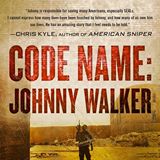
A Review of “Code Name: Johnny Walker”

code name Johnny walker
I just finished reading my advanced copy of “Code Name: Johnny Walker.” Before I write more, I’d like to include two caveats. 1. I know Johnny Walker personally. This fact is important because, I have firsthand knowledge of many of the events. Also during my decade long friendship with Johnny, I have heard many of his tails from him or other friends of his. 2. I served for years in Iraq. This exposure to Iraq’s conflict zone warps my perception. I will try to write from an outsider’s point of view, but I am confident, I am going to fail at that. Since I am not sure how to be unbiased, I am not going to worry about it.
The book, “Code Name: Johnny Walker” for me is an essential book for anyone that desires to better understand Iraq. “Hurt Locker” was fiction…this book is real. You as the reader will have no option but to be gripped by Johnny’s tales. The book has so much weight; I was reluctant to flash it in a few hours. Yet, I read it in two short readings.
Jim DeFelice’s work deserves more attention in my review. He will not receive enough credit for what he has done. If you know Jim’s work, you already know his gift as an author is a gift to us all. If you know Johnny, you’ll be amazed at Jim’s work in helping write a coherent story out of the mosaic that is Johnny’s life; while not overwriting. It is an incredible skill to co-author a story with a native English speaking partner. I cannot imagine the challenges Jim worked through to help Johnny write such an incredible book. I should spend more time on Jim’s work. I’ll ask that you, dear reader, will appreciate that I’ll simply say, “Thank you Jim.”
Johnny’s story is of a native and proud Iraqi man. How he grew up, how he learned, loved and survived. His reflections are something we rarely if ever get to see. Immediately after reading it, I wanted to go back through, chapter by chapter and re-read the entire book. I want to sit down with my friend and have 1000 conversations with him about everything.
In one book, he lets the reader better understand pre-war Iraq and its challenges. He has illustrated what we put our “partners” through and what they experience when we go abroad, “to help.” He provides insights into what was, yet wasn’t, sectarian violence in Iraq. He captures what is like for US service members who go “outside the wire.” He tells his love story in such a way that I constantly felt his family’s touch and pain. He reveals the side of Iraq’s recent history that no US news network was able/willing to reveal. In all honestly, Johnny’s story is too graphic to be told on the news. This story needs time and distance and the safety of paper to be digestible. To highlight this, take a look at the pictures they include in the book. This book is so dangerous, he’s the only person who’s not redacted. Incredible.
I have worked in Iraq for years. I’ve been on 100’s of missions. I’ve spoken with 1000’s of Iraqis. Like Johnny, I’ve been in places where I was out 2 and 3 times in one day. He has served in Iraq more than anyone else I know. Our experience allows me to say that he has captured more comprehensively than anyone else the total picture of modern war.
One aspect that I think is well illustrated is the total confusion of doing this type of work. He notes the guess work, the innuendo, the unknowable and the mistakes. Combat is not a linear thing. The more we apply Western methods and analysis the more we confuse things. Johnny gets this, he knows and it’s a giant part of what he went through. I cannot express how valuable he was to US service members. How many lives he’s saved?
His savagery, will likely net him some negative criticism. To these critics I say, “Walk in his shoes.” We have the luxury of stability and safety. None of us has been hunted, or had to hunt other humans. His tale is real. It’s unbelievable. His sacrifice his family’s costs are unbearable. Yet, here he is, writing what will surely be the best book I’ll read in 2014. There is another book in Johnny, and I can’t wait to be a part of it.