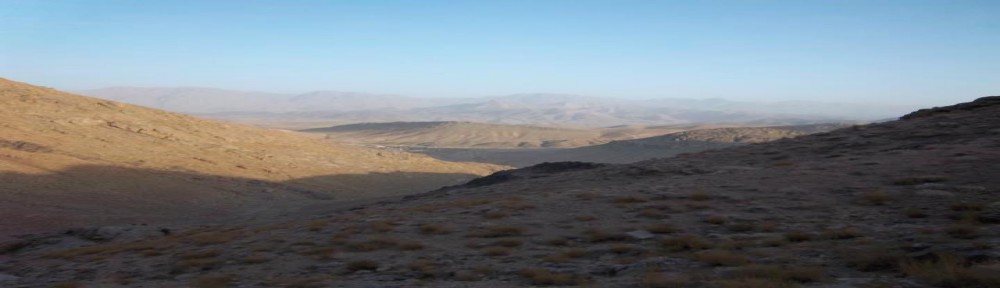
PRT and State Department Ignorance Fails Us All

This is part 1 of a post I wrote for ZenPundit.com

Guest Post: PRT and State Department Ignorance Fails Us All

[by Mark Safranski / “zen“]

AnnSmed


Anne Smedinghoff

ZP is pleased to bring you a guest post by Pete Turner, co-host of The Break it Down Show and is an advocate of better, smarter, transition operations. Turner has extensive overseas experience in hazardous conditions in a variety of positions including operations: Joint Endeavor (Bosnia), Iraqi Freedom (2004-6, 2008-10), New Dawn (Iraq 2010-11) and Enduring Freedom (Afghanistan 2011-12).

PRT and State  Department Ignorance Fails Us All

by Pete Turner

Anne Smedinghoff and 5 others died when a Taliban car bomb, a.k.a. VBIED, attacked her patrol almost 3 years ago on April 6, 2013 in Qalat city Afghanistan, Zabul province.  The mission’s purpose was to get a photo opportunity while the US patrol handed out books to Afghan kids.  Their deaths were completely preventable.

Ignorance, arrogance and incompetence by the local Provincial Reconstruction Team (PRT), Anne and her Department of State (DoS) peers surely contributed to her death, and the death of multiple soldiers.  I know that statement is pretty inflammatory…and it’s part of the reason why I waited 3 years to tell the tale.  Please read the attached article for the required context.  Also, read Peter Van Buren’s (former DoS boss) HuffPo blog in which he also criticizes DoS competence in this tragedy.

I worked in the same area as Anne, but I’d left about a year prior to her arrival.  It’s unfortunate that my research partner and I didn’t get a chance to meet her.  If we had, she would have been armed with some information that could have saved her life.  It is also unfortunate that the knowledge we gained while working in Qalat left apparently left with us.

Before going any further, my partner, Dr. Ledet and I conducted research into improving education in the province.  Specifically, we were tasked with learning how the US should distribute learning materials to Afghans, and we did so by working with tribal, religious, and political leaders in the area.  Our report was distributed to the PRT, US military and the DoS working in the areas, and briefed to higher authorities. The senior Afghan Ministry of Education (MoE) representative for the province, and multiple leaders we consulted, provided us with the solution regarding how the US could help improve education.

Our Afghan partners clearly and forcefully stated, US elements were not, under any circumstances, to provide books directly to Afghan children.

Yet, Anne and the others died on a book delivery operation. WTF?

It’s critical to understand how bad this is, as not only did the DoS and PRT undermine the MoE directive, which was given with the consent of religious leaders and family elders; effectively the patrol’s objective undermined their authority as well, and created violence and more instability.

How does this happen?  Simply, our foreign policy theory doesn’t match our tactics.  We hire highly intelligent people to do complex work, but their personal intelligence and accomplishments often mean little in this environment.  Often, the people I encounter with fantastic resumes are not trained to listen and learn.  Our failings aren’t about individual brain power and desire.  Where we fail is in our overriding compulsion to help, coupled with our inability to make sure that “ground truth” knowledge is accurately passed on to our replacements when we redeploy.

When we as a nation, bring “help” it often harms locals but sounds great in our briefings or in a eulogy...These are John Kerry’s words the day following Anne’s death, “…Yesterday in Afghanistan, we had a different stealing of a young life. And I think there are no words for anybody to describe the extraordinary harsh contradiction of a young 25-year-old woman with all of the future ahead of her, believing in the possibilities of diplomacy, of changing people’s lives, of making a difference, having an impact, who was taking knowledge in books to deliver them to a school. “  

I have words to describe this, Mr. Kerry….and they are harsh.  THAT PATROL SHOULD HAVE NEVER HAPPENED!  Anne was not properly prepared, and it’s a failure of the existing DoS and PRT staff that should have known better.  It’s the failure of whoever disregarded that day’s threat assessment to send out a patrol on a photo safari.  Those photos only validate our ignorance, and do nothing to repair the damage of that day.

Mr. Kerry and Anne simply wanted to help the Afghans become educated, but in reality that patrol was indicative of the continued separation between the Afghans and US partners. That patrol also created another opportunity for the Taliban to show locals where their future interests lie.  Because we don’t learn, and continue to act as though our culture is superior to the Afghans, we fail to make the kind of progress necessary to create stability.

It’s one thing for me to criticize John Kerry and Anne…hang in there, when I post part 2, I’ll illustrate how Dr. Ledet and I were able to use culture to our advantage, and gain uncommon access to the Afghans while we learned the appropriate way to support the MoE.
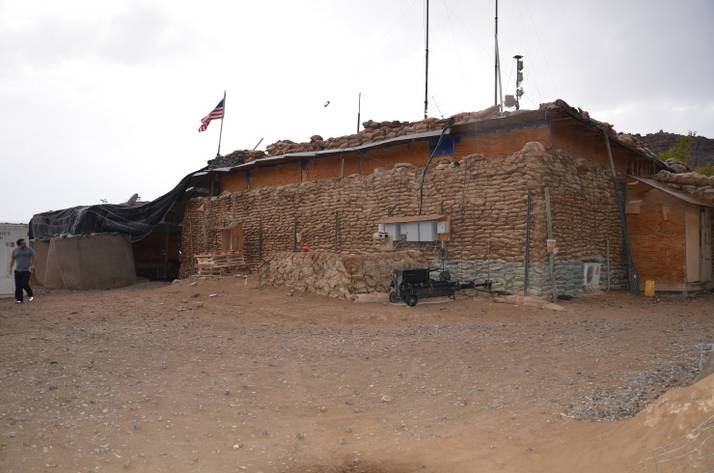
Running To Contact


Lots of email traffic about last week’s blog. Please post your thoughts in the comments. We love what you have to say.

I thought we’d cover danger in Afghanistan again by examining, “When Insurgents attack.”

A quick aside…over the years one develops a sense for explosions. Some are “ours”…outgoing mortars, rounds from a gun or controlled detonations. We learn the sounds of different weapon systems. A helicopter followed by a high pitched drone and several whooshes is an Apache firing it’s main gun and rockets. Whomp Whomp Whomp


 is an M60/M240. Ma duece says Bum Bum Bum. Artillery is LOUD and has a pointy sound when outgoing. Incoming is more spherical.

We also develop a sense of distance and direction for the booms…it’s all part of our survival mechanism. Another aspect is awareness of our surroundings. We constantly scan and consider what to do if we are attacked …where is the nearest bunker or where is the closest safest place?

This sounds frightening, but we all do this. Motorcycle riding is a good analog. When riding


 we have to be aware of spacing. Scanning for threats and escape routes saves a rider’s life.

The sound that puts me face first on the ground are mortars wobbling towards me. They make a unique sound that I can’t quite describe. Sort of of a frantic flutter…the closest sound I can come up with is the rattle of a door stop when accidentally brushed. Rockets and their vibrating engine sound are also unnerving. If you can hear them flying, they are too damned close…


~~The following tale is fictional for security reasons…however, it’s based on real events~~

Just the other day an interpreter, an associate and I were interviewing a local. As we discussed a variety of topics BOOM shatters our interview. My brain, a brain with years of combat time, comes up with “That’s too loud to be them…but doesn’t sound like us.” This brilliant statement was followed by a closer explosion, much closer, 50′ from our location. This burst launches a splash of pebbles on the window near us.
“We need to move to the middle of the building.”


Other than a lucky shot through a window, we’re safe from their rockets here.

The first explosion alerted soldiers…they drop whatever they are doing, scramble to grab gear, rack rounds and set up defense. The post is a safe haven in seconds.

I’m not on post.

Safe as Houses on Post

We’re squarely in “Indian Country” several hundred meters from the post and it’s safety. We call in our report, we’re safe…after the second explosion, several more ring out over the next 60 seconds. The air fills with gun fire from multiple directions. However, none of it is near us at the moment.

The commander, a good looking tall blond dude stands on top of his command center, hands on hips, not a drop of fear…leading by simply standing there.

As the firefight escalates, Afghan forces probe with bullets for Taliban fighters. Their shooting is reckless and ineffective.

Decision time, do we stay in our “bunker” or make a run across open ground to improve our security on post? While shots ring out, “Let’s get back to post.” No discussion, no hesitation, once one of us makes the call, we all move together. BTW—my dumb ass is wearing flip flops (its culturally appropriate) as we jog back toward post.

One big worry remains, I say “call it in…I don’t want to get shot by one of us.” (a Pat Tillman jersey hangs by my bed.)

Then we see something you can’t understand. It’s “Dave,” he’s sprinting out of the gate we’re headed towards;OFF post!!! Sprinting past us…no, he’s not there to help us…he’s doing what warriors do, “running to contact.”

But is it really dangerous…

Chuck and his Boom Stick

I often am asked, “How dangerous is it?”

We know war from movies. Films depict a particularly tough battle or campaign. Though films are meant to be “real;” war is often boring. We don’t see the dull side of war because there’s nothing there. Hurt Locker is a great example. Sure, it’s gritty and intense, but not real. Yes, there are guys that defuse bombs…but…it’s not exciting, it’s boring.

Let’s say were on a combat patrol rolling through Baghdad…We encounter a guy that throws two RKG3s at us. RKG-3s suck…they penetrate armored vehicles. Once they’ve been deployed, they are HIGHLY unstable. Let’s say, one grenade explodes; we survive with little impact. The other is a “dud”–remember, HIGHLY unstable once thrown.

The mission executes a security halt. We call EOD (bomb squad) to help–we can’t have this thing blowing up innocent Iraqis. The EOD team stops playing X-Box, gears up and preps the required vehicles/team. About 4 vehicles and 12-20 troops roll out to “save” us.

All of this takes several hours to occur. Meanwhile, it’s about 130deg outside, we sit and sweat it out in our vehicles. (“Hurt Locker” nailed the heat.) Ultimately, the EOD team decides the bomb is too dangerous to move and decide to explode it in place. 60 minutes later there’s a large boom–ours–and off we go to continue our mission. Total delay 4-6 hours. Terrifying.

More danger….
On a regular basis mortars are lobbed at us, recoilless rifles launch rounds, RPG’s whiz by, but it’s considered harassing fire. Crazy right? We hear booms and bombs, it’s normal…Heck, many of the booms are the US shooting back. It’s not constant, not even daily in most places, a bomb goes off, we keep on working.

Many times the explosions by the Taliban or Al’Qaeda are more a statement than a means of killing people (though they do hurt and kill). These bombings are a means of saying, we’re hear, you can’t stop us; we’re not going to quit.

Maybe focusing on the boredom of day to day life, you’ll get an idea of how normal, normal really is…

Hundreds of flights occur daily, in a variety of environments using multiple types of aircraft. There are thousands of patrols each month. People and equipment moving tens of thousands of miles every day yet, casualties are not common.

Commanders worry about seat belts, safe driving practices and suicide as much as anything else. I don’t want to overstate the safety–there was a time when numerous daily gun battles was the norm, we’ve all got our “bad day” story; but death is the exception.

Say we met at Bagram Air Field, Afghanistan, you’d probably find me head down reading my Kindle as I walked from here to there. There are hundreds of service members passing one another on the street. Many of these people have bags from the mall where they buy, leather jackets, Dre Beats headphones, local food or an Ipad.

Maybe we’d agree to hang out at Salsa night for non-alcoholic drinks…or go to the “Green Bean” and drink gourmet coffee…ohhh I can smell the danger. Reading while walking and getting burned by your mocha, those are the dangers most of us face.
That doesn’t sound all that hazardous does it.

This isn’t to say that danger isn’t lurking. Unlike the US there are people actively hunting us all the time.

Before every mission, a squad leader discusses, among other things, the MDCOA (Most Deadly Course of Action). When was the last time you conducted a pre-vacation brief for the family and considered the enemy’s capability to kill you and your family? So there is danger, but of the 100,000 of us…nearly all are safer than many places in the US.